Stages of Trauma Therapy: A Visual Overview

Author: Dr. Mary Perleoni, Ph.D., LMHC
Updated: March 13, 2025
Trauma therapy doesn't happen all at once, it unfolds in a carefully sequenced process designed to protect your nervous system while guiding you toward lasting healing. This visual overview breaks down the three phases your therapist will move through with you, why the order matters, and what to expect at each stage. For a deeper read, explore our overview of the stages of trauma therapy or our detailed breakdown of each phase of trauma therapy.
A Visual Guide to the 3 Phases of Trauma Therapy
Trauma treatment follows a three-phase model developed and validated over decades of clinical research. The phases are Stabilization, Trauma Processing, and Integration, and are sequential by design. Each one builds the foundation for the next. Rushing or skipping a phase doesn't speed up healing, it undermines it.
In our Tampa mental health practice, our therapist assess your readiness before moving between phases, always pacing treatment to what your mind and body can safely handle.

Visual Breakdown: Stabilization Phase
Before any trauma memory is touched, your therapist focuses entirely on helping you feel safe — in your body, in the therapeutic relationship, and in daily life.
What happens in this phase:
Building a trusting, consistent therapeutic relationship
Developing grounding and distress tolerance skills
Identifying triggers and creating a personal coping toolkit
Stabilizing sleep, mood, and daily functioning where needed
Establishing a sense of internal safety
You are ready to move to Phase 2 when you have reliable ways to manage distress and can stay grounded when difficult emotions arise, without becoming overwhelmed or shutting down.

Visual Breakdown: Trauma Processing Phase
This is the phase most people picture when they think of trauma therapy. With the safety foundation built in Phase 1, your therapist will carefully guide you through processing the traumatic memories themselves — reducing their emotional charge and helping your brain file them as past events rather than ongoing threats.
What happens in this phase:
Revisiting traumatic memories in a controlled, supported way
Reprocessing the meaning, beliefs, and body sensations tied to trauma
Reducing the intensity and intrusiveness of traumatic memories
Working through grief, shame, or anger that the trauma created
Trauma modalities commonly used here include: EMDR therapy, Cognitive Processing Therapy (CPT), somatic therapies, and trauma-focused CBT. Your IBW therapist will recommend the right approach based on your history and goals. Learn more on our trauma therapy modality pages.
This phase takes time. There is no shortcut. Your therapist will check in regularly on pacing and adjust as needed.

Visual Breakdown: Integration Phase
Once trauma has been processed, the work shifts to consolidating your gains and building the full, connected life you came to therapy for.
What happens in this phase:
Making meaning of your experience and your healing journey
Rebuilding or deepening relationships
Reconnecting with your values, identity, and future
Developing resilience skills for navigating future stress
Gradually reducing the frequency of therapy sessions
Integration is not a finish line, it's a way of living. Many clients continue occasional sessions during this phase as they apply their growth to new life circumstances.
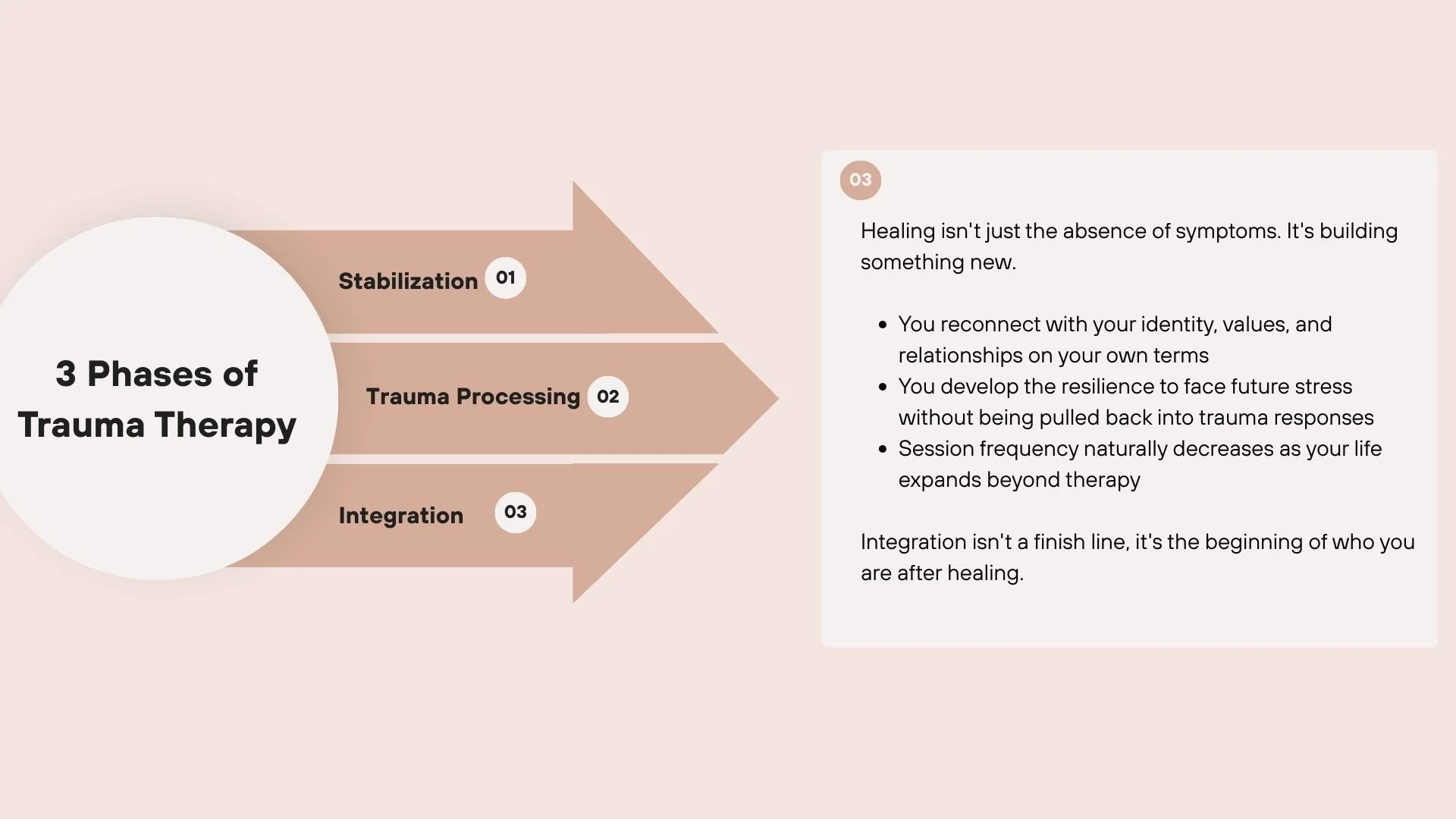
How the 3 Phases of Trauma Therapy Connect
The phases aren't always perfectly linear. A client may begin Phase 2 and need to return briefly to Phase 1 stabilization skills before continuing, especially when processing particularly difficult material. This isn't a setback. It's the model working exactly as intended.
What never changes: your therapist leads the pacing. You are never pushed into processing before you're ready. At It Begins Within, every one of our therapists works exclusively with their focused specialty population, which means your trauma therapist brings deep, specific expertise to this sequencing, not a generalist approach.

Frequently Asked Questions
What are the 3 phases of trauma therapy?
The three phases are Stabilization, Trauma Processing, and Integration. Each phase builds on the last, moving from safety and skill-building through active trauma processing to full-life reconnection and meaning making.
How long does each phase of trauma therapy take?
It varies significantly by individual. Stabilization can take weeks to months. Trauma processing is typically the most intensive phase and may span several months. Integration is often gradual and ongoing. Your therapist will continually assess pacing with you.
Can I skip phases in trauma therapy?
No. The phases are sequenced for clinical and neurological reasons. Processing trauma without first establishing stabilization can be destabilizing or harmful. A skilled trauma therapist always prioritizes safe pacing.
What therapy modalities are used during trauma processing?
Common approaches include EMDR, Cognitive Processing Therapy (CPT), somatic therapies, and trauma-focused CBT. The right modality depends on your trauma history, nervous system, and goals. Your IBW therapist will guide this choice.
Does trauma therapy at It Begins Within follow this model?
Yes. Our therapists are specialists, each focused exclusively on their population, which means your trauma therapist has deep expertise in guiding this process. To learn more or schedule a consultation, visit our trauma therapy services page.