

OCD Therapy in Tampa, St. Petersburg & Sarasota
Expert ERP & CBT for OCD Treatment in Florida
OCD is highly treatable, but effective treatment requires understanding how obsessive-compulsive disorder actually works. Intrusive thoughts, uncertainty, avoidance, reassurance-seeking, and compulsive behaviors can become increasingly disruptive, particularly during periods of stress or major life change.
Our licensed OCD therapists in Tampa, St. Petersburg, and Sarasota provide evidence-based OCD treatment, including Exposure and Response Prevention (ERP) and Cognitive Behavioral Therapy (CBT). Treatment focuses on helping you understand the OCD cycle, respond differently to intrusive thoughts, reduce compulsive behaviors, and gradually regain confidence in your ability to tolerate uncertainty.
What is Obsessive Compulsive Disorder?
Obsessive Compulsive Disorder, commonly referred to as OCD, is a mental health disorder characterized by obsessions, which are unwanted thoughts, images, or urges that often trigger intense anxiety that greatly impacts the ability to function in everyday life. It involves two main components: obsessions and compulsions.
Understanding OCD Symptoms
Understanding the difference between obsessions and compulsions is one of the first steps in recognizing OCD. Many people search for answers such as “How do I know if I have OCD or anxiety?” — and the key distinction is that OCD obsessions are persistent, intrusive, and often irrational, creating intense distress that leads to compulsive behaviors. General anxiety may come and go, but OCD thoughts feel repetitive, sticky, and urgent, often triggering OCD attacks or specific OCD triggers.
Below is a clear breakdown of the most common symptoms we see at It Begins Within Therapy in Tampa, St. Petersburg & Sarasota:

What Type of Therapy is Best for OCD Treatment in Florida?

Forms of behavioral therapy for OCD are most commonly recommended and proven to be highly effective, especially Cognitive Behavioral Therapy (CBT). Specifically, a subtype known as Exposure Response Prevention Treatment (ERP) is utilized for its effectiveness in managing OCD symptoms.
-
OCD Cognitive Therapy is a type of therapy that focuses on identifying and changing negative thought patterns and behaviors. It helps individuals understand how their thoughts, feelings, and behaviors are interconnected, and teaches them strategies to manage and reduce their symptoms.
-
ERP is a specific form of CBT that is particularly effective for OCD. It involves two key elements:
Exposure: This involves gradually and systematically exposing the person to the thoughts, images, objects, and situations that trigger their anxiety and obsessions. For instance, if someone has a fear of contamination, they might be exposed to touching a doorknob or a public surface.
Response Prevention: This step focuses on helping the person refrain from engaging in their usual compulsive behaviors or rituals in response to the anxiety-provoking stimuli. For example, after touching the doorknob, the person would avoid washing their hands immediately.
-
Often individuals working to overcome OCD achieve the greatest results through a combination of approachs. Additional treatments include:
Medication including Selective serotonin reuptake inhibitors (SSRIs) are commonly prescribed for OCD. They can help reduce the symptoms of OCD by affecting the brain's chemical balance.
Acceptance and Commitment Therapy (ACT): This therapy focuses on accepting unwanted thoughts and feelings rather than trying to fight them. It encourages individuals to commit to actions aligned with their values, despite the presence of OCD symptoms.
ERP Therapy for OCD
Exposure and Response Prevention, commonly called ERP, is a specialized form of Cognitive Behavioral Therapy used specifically to treat OCD. Rather than treating intrusive thoughts as problems that need to be eliminated, ERP helps you gradually change the way you respond to them.
The word “exposure” can make ERP sound intimidating. Effective ERP is not about forcing you into your worst fear or asking you to tolerate overwhelming distress without support. Treatment is collaborative and structured. You and your therapist identify the situations, thoughts, images, sensations, or uncertainties that trigger the OCD cycle and gradually practice approaching them while reducing the compulsions that normally provide temporary relief.
What ERP Actually Involves
Early sessions usually focus on understanding how OCD operates in your life. You and your therapist identify obsessions, triggers, avoidance patterns, mental rituals, reassurance-seeking, checking, and other compulsions that may be maintaining the cycle.
From there, you work together to develop manageable opportunities to practice responding differently. Someone with contamination OCD might gradually practice touching an object they normally avoid without immediately washing. Someone with checking OCD might practice leaving home after checking the lock once rather than returning repeatedly. For someone experiencing intrusive thoughts, ERP may involve learning to allow the thought to be present without analyzing it, neutralizing it, or trying to prove that it is untrue.
The goal is not to make you comfortable with dangerous situations or to convince you that your fears are irrational. The goal is to build your ability to experience uncertainty and discomfort without relying on compulsions to make those feelings disappear. As this response changes, OCD can begin to demand less of your attention and interfere less with your life.
Reassurance-Seeking and OCD
Reassurance-seeking is one of the less obvious compulsions associated with OCD. You may repeatedly ask a partner, parent, friend, therapist, or even the internet whether something is safe, whether you made a mistake, whether a thought means something about you, or whether you can be completely certain that nothing bad will happen.
Reassurance often lowers anxiety temporarily, which is precisely why it can become part of the OCD cycle. The relief teaches the brain to seek reassurance again the next time uncertainty appears. ERP can help you recognize this pattern and gradually practice tolerating uncertainty without repeatedly asking someone else to resolve it for you.
ERP is tailored to the way OCD shows up for you. Treatment can be challenging at times, but the process should remain collaborative, purposeful, and connected to the life you want to regain from OCD.
Different Types of OCD We Treat Across Tampa, St. Petersburg & Sarasota
OCD doesn’t look the same for everyone. Some people struggle with intrusive thoughts, while others feel driven to clean, check, count, or seek reassurance. Many people don’t realize their symptoms fall under a specific subtype of OCD until they begin therapy. At It Begins Within Healing Center, our licensed clinicians treat all forms of OCD using evidence-based approaches like CBT and Exposure and Response Prevention (ERP), the gold-standard treatment for OCD.
Below are some of the most common OCD types we support in our Tampa, St. Petersburg, and Sarasota offices:
Contamination OCD
Fear of germs, illness, chemicals, or contamination. Often includes washing, cleaning, or avoidance rituals.
Checking OCD
Repeatedly checking locks, stoves, appliances, work tasks, or personal items for safety or accuracy.
Harm OCD
Intrusive fears about accidentally or intentionally harming yourself or others — not reflective of your true intentions.
“Just Right” / Symmetry OCD
A strong need for things to feel perfect, aligned, equal, or arranged in a specific order to relieve discomfort.
Relationship OCD (ROCD)
Intrusive doubts about your partner, yourself, or the relationship, even when things are going well.
Scrupulosity / Moral OCD
Fear of being immoral, sinning, or violating personal, religious, or ethical standards.
Taboo Intrusive Thoughts
Unwanted, distressing sexual, violent, or religious intrusive thoughts that feel out of character or shame-inducing.
Counting, Repeating & Mental Rituals
Internal compulsions such as repeating phrases, reviewing events, mentally checking, or counting to reduce anxiety.
Hoarding / Difficulty Discarding Items
Emotional distress when parting with objects, leading to clutter, overwhelm, or avoidance.
OCD Therapists in Tampa, St. Petersburg & Sarasota

Emma Groskind, LCSW
Emma is a trauma-informed clinician who specializes in treating anxiety and intrusive thoughts using CBT and EMDR. As a certified Trauma-Focused CBT therapist, she helps clients interrupt anxious thought patterns and build practical tools for managing OCD symptoms.

Amanda Farris, LCSW
Amanda brings a body-centered, mindfulness-based approach to OCD treatment, integrating attachment-focused EMDR, ACT (Acceptance and Commitment Therapy), and DBT. As a registered yoga teacher, she understands how anxiety lives in the body and helps clients develop grounded strategies for managing obsessive patterns. Amanda's relational style helps clients navigate the shame and isolation that often accompany OCD while building sustainable coping skills.
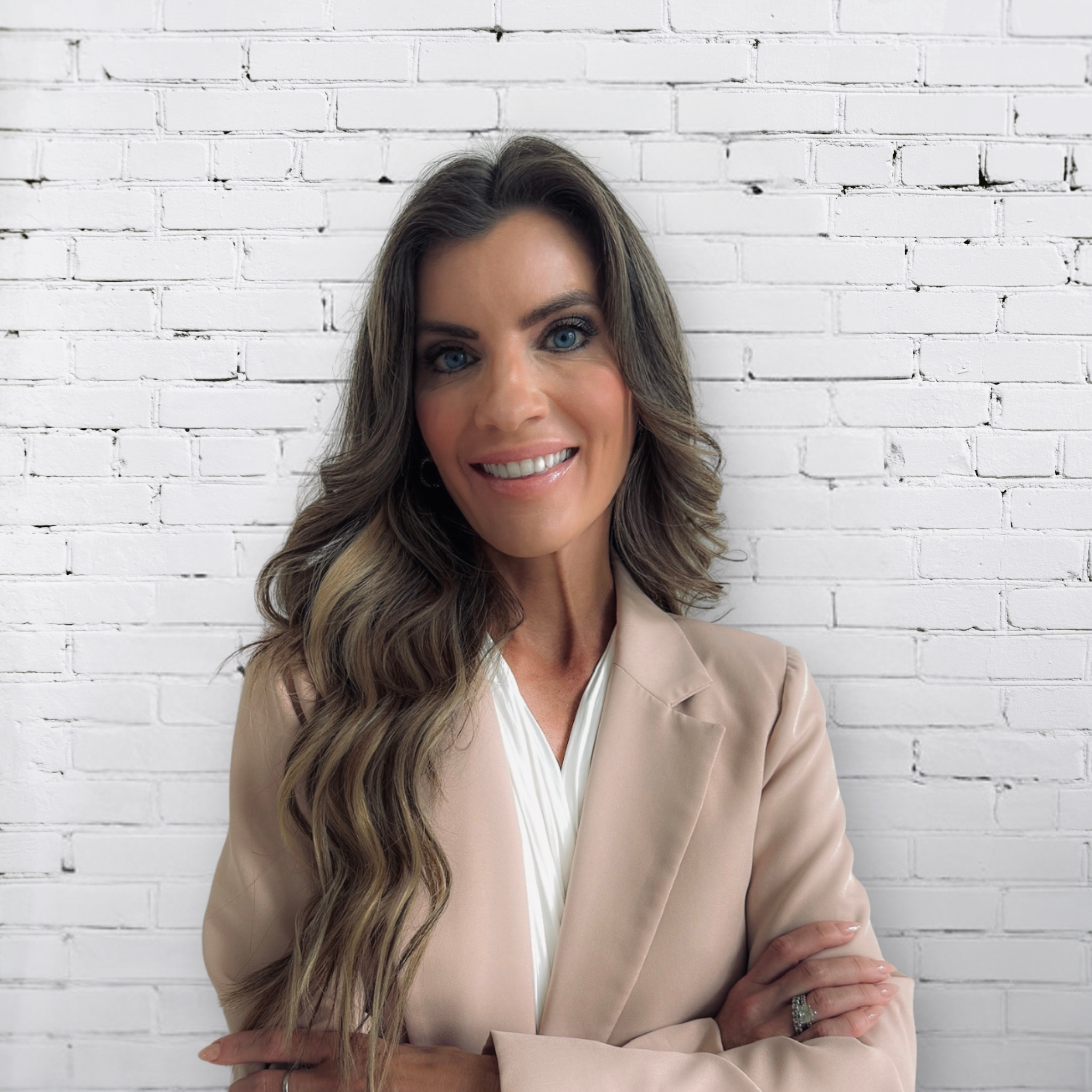
Chelsea Walker, LMFT
Chelsea works with individuals and couples navigating the relationship impact of OCD using Emotionally Focused Therapy and ERP. She helps clients break free from rigid thought patterns and compulsive behaviors while strengthening connection with partners and family members. Chelsea's warm, collaborative style makes her particularly effective in supporting those whose OCD has created distance or conflict in their closest relationships.

Liza Prochnow, LCSW
Liza specializes in Exposure and Response Prevention (ERP) for OCD, supported by CBT and DBT. She helps adults break the cycle of intrusive thoughts, reassurance seeking, and compulsions that can shrink daily life. Liza's honest and relational style makes the hard work of ERP feel much easier.
OCD Therapy in Sarasota
OCD can be easy to mistake for general anxiety, particularly when it shows up as persistent overthinking, reassurance-seeking, avoidance, checking, or a need to feel certain before moving forward. You may recognize that a fear is excessive or unlikely while still feeling unable to stop reviewing what happened, researching possibilities, asking other people for reassurance, or performing physical or mental rituals to reduce the anxiety. The relief these behaviors provide is often temporary, and over time the cycle can take up more mental space and interfere with everyday life.
At our Sarasota office, Liza Prochnow, LCSW, Samantha Wilson, LMHC, Chelsea Walker, LMFT, andCiana Nguyen, LCSW, provide therapy for clients experiencing OCD and related anxiety concerns. Treatment is focused on understanding how OCD operates specifically, including the relationship between intrusive thoughts, uncertainty, avoidance, reassurance-seeking, and compulsive behavior, rather than approaching OCD as generalized anxiety alone. Depending on the clinician and individual treatment needs, therapy may incorporate evidence-based approaches including Exposure and Response Prevention (ERP), Cognitive Behavioral Therapy (CBT), Acceptance and Commitment Therapy (ACT), and other strategies designed to help clients respond differently to obsessive thoughts and reduce the compulsive behaviors that keep the cycle going.
Our Sarasota office serves clients throughout Sarasota, Palmer Ranch, Siesta Key, Gulf Gate, Lakewood Ranch, Bradenton, and surrounding communities. In-person OCD therapy is available in Sarasota, with virtual therapy options available throughout Florida when appropriate.

OCD Therapy in St. Petersburg
Finding effective OCD treatment in St. Petersburg doesn’t have to feel overwhelming. At It Begins Within Therapy, our licensed therapists provide evidence-based OCD treatment using Exposure and Response Prevention (ERP) and Cognitive Behavioral Therapy (CBT). These therapies help you understand the OCD cycle, reduce compulsive behaviors, and feel more confident managing intrusive thoughts.
Many of our St. Petersburg clients experience unique stressors—from busy waterfront districts to demanding professional roles—that can amplify OCD symptoms. Our clinicians bring years of experience supporting clients through the most common (and less common) OCD symptoms. Treatment is always personalized, structured, and grounded in compassion so you can move at a pace that feels safe.
If you’re searching for OCD therapists in St. Petersburg or wondering whether your symptoms fit the OCD pattern, we’re here to help. Thousands of people see meaningful improvement with ERP and CBT, and our St. Petersburg team is trained to deliver these approaches with skill and sensitivity.
OCD Therapy in Tampa
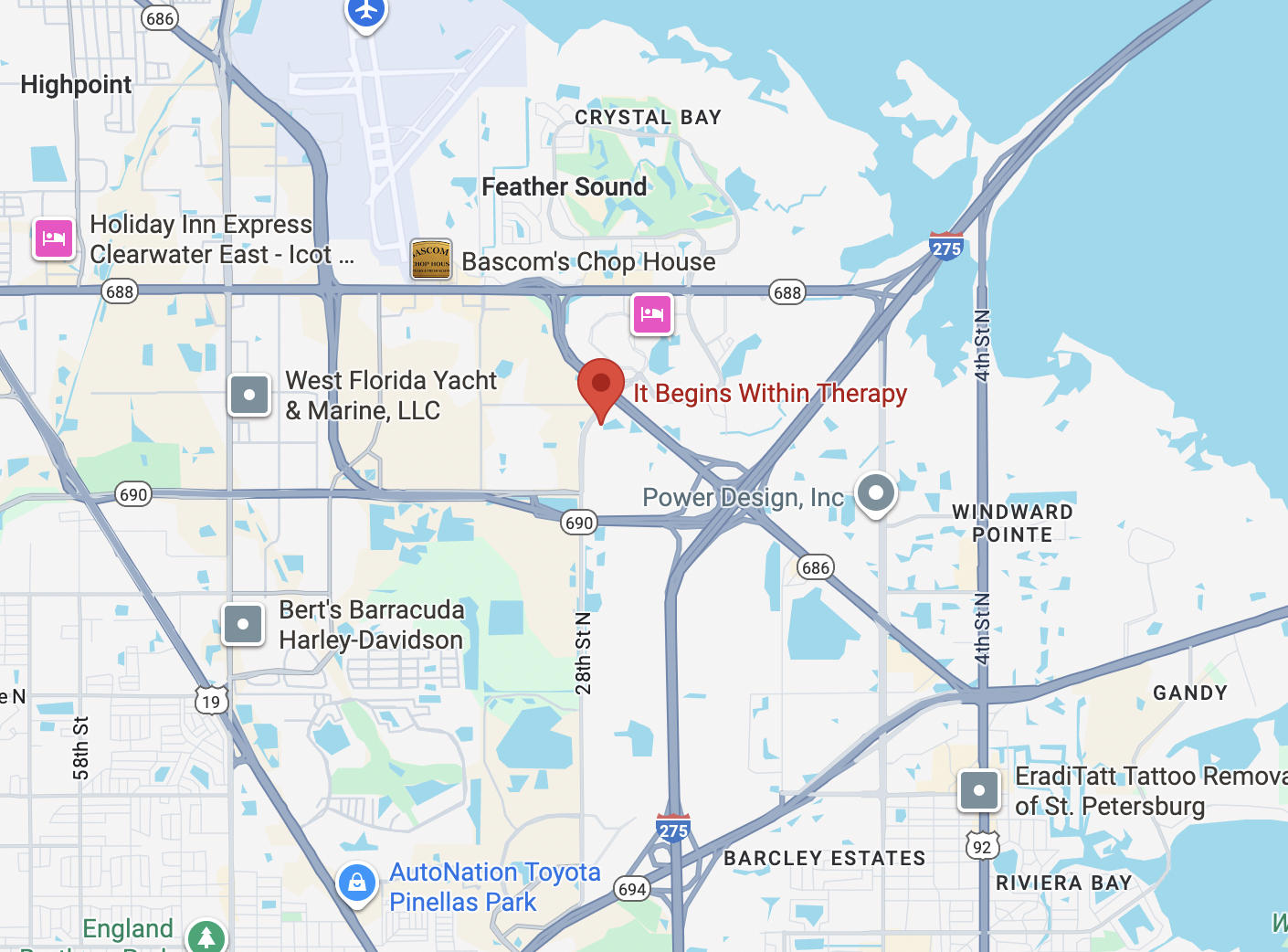
OCD can be exhausting, especially when you’re trying to manage intrusive thoughts or compulsive routines while keeping up with the pace of life in Tampa. Many clients here juggle demanding careers, family responsibilities, and constant stimulation—from traffic to hectic work environments, which can make OCD symptoms feel louder and harder to control. Our licensed therapists in Tampa understand how overwhelming this can be and offer a calm, structured space to regain clarity.
Our Tampa therapists offer OCD treatment centers on both ERP and CBT—the two most effective, research-supported methods for reducing obsessions and compulsions. These approaches help you understand the patterns driving your symptoms, break the cycle of avoidance, and build confidence in your ability to navigate triggers. Each plan is tailored to your pace, your goals, and the specific ways OCD shows up in your daily life.
We work with individuals across South Tampa, Hyde Park, Davis Islands, Westchase, Carrollwood, New Tampa, Brandon, Riverview, and the surrounding areas who are ready for real support and clarity. Whether you’re seeking a formal diagnosis, trying to understand confusing thoughts, or looking for a therapist who specializes in OCD and anxiety, our clinicians are here to help.
Can OCD Be Overcome With Therapy?

Many people who are treating ocd in therapy undergo ERP and CBT see a significant reduction in their OCD symptoms. For some, therapy can lead to complete remission, meaning their symptoms are minimal or non-existent. Others might still have some symptoms but find them much more manageable and less disruptive to their lives.
Long-term Management
Overcoming OCD tendencies is often a gradual process. It's important to:
Stick with Therapy: Regular sessions and commitment to the therapeutic process are crucial.
Practice Consistently: Continually apply the techniques learned in therapy to real-life situations.
Follow Up: Periodic check-ins with a therapist can help maintain progress and address any new or recurring issues.
Effective Treatment Options for OCD Therapy in Tampa, St. Petersburg & Sarasota
OCD is a challenging mental health condition characterized by intrusive thoughts and repetitive behaviors. Fortunately there are highly effective treatment options available, including OCD Cognitive Therapy and Cognitive Behavioral Therapy for OCD. These approaches are intended to help individuals manage symptoms, regain control over their lives, and reduce the distress caused by OCD.
Cognitive Behavioral Therapy for OCD
Cognitive Behavioral Therapy is generally referred to as the gold standard for treating OCD. A specialized form of CBT called Exposure and Response Prevention is particularly effective. ERP involves gradually exposing individuals to situations that trigger their obsessions while preventing the compulsive behaviors typically used to reduce anxiety. Over time, this process helps desensitize individuals to their triggers, reducing the power OCD has over their lives.
In OCD cognitive therapy, the focus is on identifying and restructuring distorted thought patterns that fuel obsessions. This approach helps individuals recognize that their intrusive thoughts are not dangerous or reflective of their true character, reducing the need to engage in compulsive behaviors. Cognitive therapy is often combined with ERP to maximize effectiveness.
Medication and Side Effects
In some cases, medication can complement therapy for Obsessive-Compulsive Disorder (OCD). Selective Serotonin Reuptake Inhibitors (SSRIs), such as sertraline or fluoxetine, are commonly prescribed. These medications can help reduce the intensity of obsessive thoughts and compulsive behaviors, making therapy more effective. It’s important to consider potential side effects, which may include nausea, fatigue, or changes in sleep patterns.
Why Seek OCD Therapy in Tampa?
At It Begins Within Counseling in Tampa, we offer tailored treatment plans for OCD, incorporating Cognitive Behavioral Therapy, ERP, and other evidence-based approaches. Our therapists understand the unique challenges of living with OCD and provide a supportive environment where you can explore and overcome your symptoms. Whether you’re new to therapy or seeking advanced interventions, we’re here to help you find relief and achieve lasting change.
If you or a loved one are struggling with OCD, reach out to our team today. Together, we can develop a personalized treatment plan to help you break free from the cycle of obsessions and compulsions and reclaim your life.
Understanding OCD in Tampa & Beyond
At It Begins Within Healing Center in Tampa, Florida, we provide expert OCD therapy in Sarasota, as well as across Tampa and St. Petersburg. The demand for trusted obsessive-compulsive disorder (OCD) therapy is growing, especially for those facing persistent intrusive thoughts and compulsive behaviors.
Key Facts About OCD
The National Institute of Mental Health (NIMH) reports that approximately 3.1 million adults in the United States are living with OCD in a given year. NIMH.
The National Institute of Mental Health (NIMH) notes that about 76% of individuals with OCD have a lifetime history of an anxiety disorder, with GAD being one of the most common NIMH OCD Stats.
These insights align with what we observe in our Tampa practice. OCD can significantly affect mental health, daily routines, and even relationships. With compassionate and effective OCD therapy, our clients are able to regain control and reduce distress. Whether you’re managing obsessive thoughts or seeking relief from compulsions, our team is here to support you every step of the way.

Find Effective OCD Treatment Near Me
We offer comprehensive mental health services and are dedicated to the best outcome for our clients. Please reach out to us today to book a session with one of our skilled therapists.