
How Trauma Manifests Differently in Children Than Adults

Author: Melissa Zentner, LMHC

Reviewer: Dr. Mary Perleoni, Ph.D., LMHC ✓
Published January 23, 2026
When a child experiences trauma, their world changes in ways most adults don't fully understand. As a trauma therapist in St. Petersburg who has worked with children, adolescents, and adults for over 12 years, I've seen how the same traumatic event can create completely different responses depending on someone's age and stage of development.
Understanding these differences matters. When we recognize how trauma uniquely affects developing minds, we can respond with the right support at the right time—potentially changing a child's entire life trajectory.
Why Children Process Trauma Differently
The main difference comes down to one thing, development. A child's brain, nervous system, and sense of self are still forming. When trauma happens during these critical growth periods, it doesn't just create a painful memory, it can shape how their brain develops, how they see themselves and others, and how they navigate the world.
Adults typically have established coping skills, a fully developed brain that helps with reasoning and impulse control, and years of experience to draw upon. Children have none of these advantages. Their brains are still building the very systems they need to process and recover from trauma.
When Children Can't Find the Words
One of the biggest differences between childhood and adult trauma is how it gets expressed. Adults can usually say what they're experiencing: "I feel anxious when I hear loud noises because it reminds me of the accident." Children, especially younger ones, often don't have the words or the brain development to explain what they're going through.
Instead, children show their trauma through behavior. A four-year-old who witnessed domestic violence might become aggressive with other kids. A 7 year old who experienced abuse might start wetting the bed again. A ten-year-old dealing with grief might suddenly fail at school, not because they can't do the work, but because their stressed brain can't focus.
This is why child therapy uses age-appropriate approaches like play therapy through art and games. These methods meet children where they are, letting them express and process trauma through play, the natural language of childhood.
How Trauma Looks at Different Ages
Trauma doesn't look the same in a toddler versus a teenager. Each age brings different vulnerabilities.
Babies and Toddlers (0-3 Years)
Even babies experience traumatic stress. While they won't consciously remember it, trauma during infancy affects attachment, emotional control, and stress responses throughout life. Signs include:
Excessive crying or trouble being soothed
Changes in eating or sleeping
Going backward in development
Extreme startle responses
Trouble separating from parents or seeming overly independent
Preschoolers (3-6 Years)
At this age, children are learning to talk but still understand the world through what they can see and touch. Trauma often shows up as:
Playing out the traumatic event over and over
Fears that seem extreme to adults
Stomachaches or headaches with no medical cause
Going back to baby behaviors (baby talk, accidents after being potty trained)
Big emotions they can't control, leading to meltdowns or hitting
School-Age Children (6-12 Years)
Elementary-aged kids can better understand what happened, but this awareness brings new problems. They might have:
Intrusive thoughts or nightmares
Trouble focusing at school
Pulling away from friends and activities
Guilt or feeling like the trauma was their fault
Acting differently at home versus school
Teenagers (12-18 Years)
Teens process trauma more like adults but with added complications from puberty, identity development, and peer pressure. Signs include:
Risk-taking or substance use
Major changes in friend groups or isolating
Self-harm or suicidal thoughts
Eating disorders or body image problems
Grades dropping or refusing to go to school
Anger or defiance that's out of character
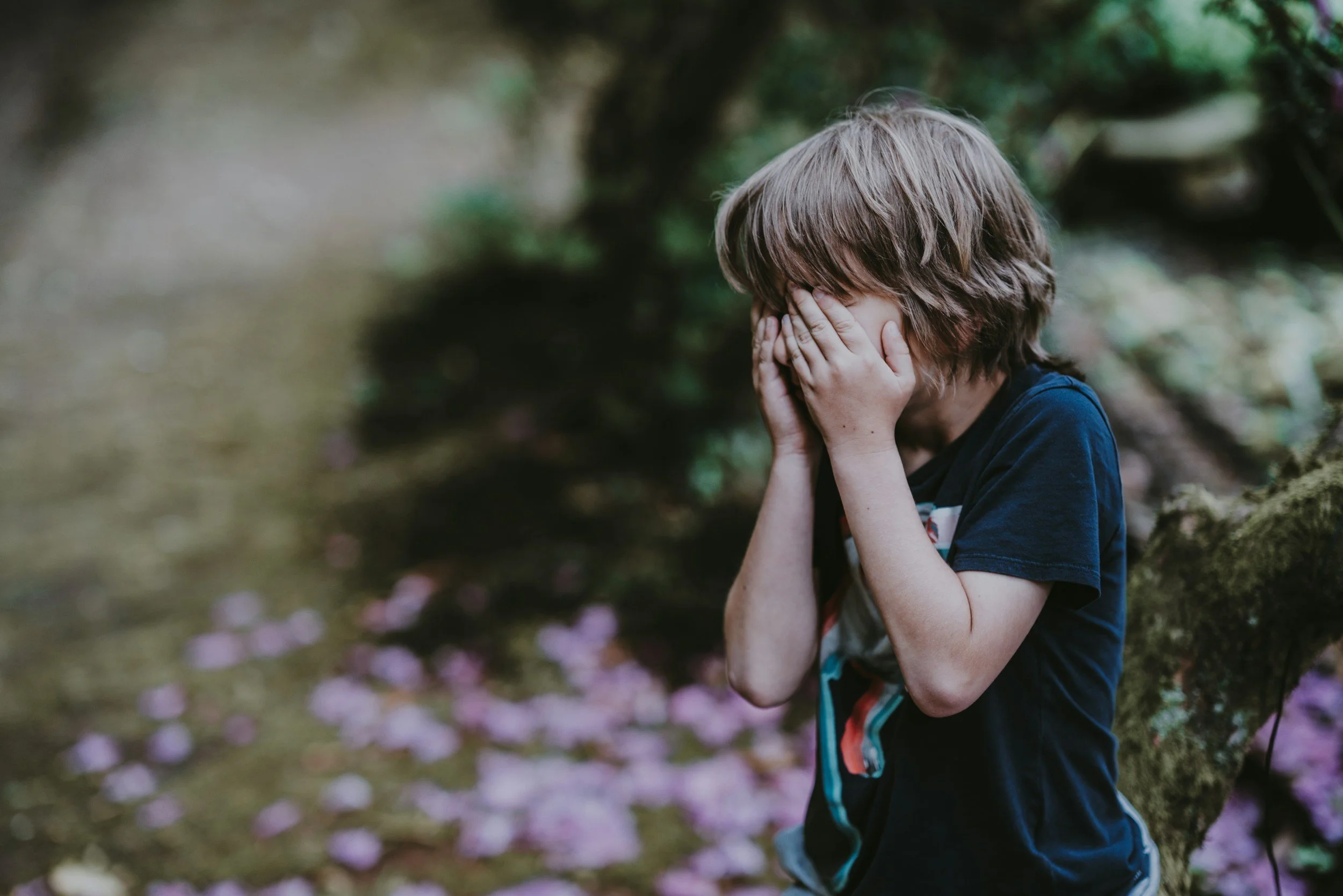
When Development Gets Derailed
What to Watch For in your child
While adults with trauma might struggle with PTSD or anxiety, the impact usually stays in the emotional realm. For children, trauma can knock multiple areas of development off track at once.
Brain Development
Chronic stress during childhood can actually change brain structure. The developing brain adapts to survive in a threatening environment, an overactive fear center and an underdeveloped reasoning center. This isn't just about feeling scared. It's the physical brain changing.
Relationships and Trust
Children learn how relationships work through early experiences. When trauma happens within primary relationships (like abuse by a caregiver), it teaches children that the world is unsafe and people can't be trusted. This core belief affects every relationship they'll ever have.
Adults who experience trauma already know what healthy relationships feel like. Traumatized children are building their entire understanding of relationships on a foundation of danger.
Emotional Control
Adults enter trauma with established emotional regulation skills (even if imperfect). Children are still learning these skills, and trauma disrupts the learning process. A traumatized child might overreact to small stressors or shut down emotionally, appearing numb.
These aren't choices, they're survival adaptations that make sense in danger but cause problems in safety.
Physical Health
Research shows that childhood trauma increases rates of chronic health problems throughout life, including diabetes, heart disease, and autoimmune disorders. The stress literally affects immune function and inflammation in ways that last into adulthood.
Trauma Hiding in Plain Sight
Childhood trauma can be surprisingly hidden. A child might seem fine at school while falling apart at home, or the opposite. This confuses adults who expect trauma symptoms to be constant and obvious.
Children also survive in ways adults misread. A hypervigilant child constantly monitoring adults' moods isn't being "mature"—they're in survival mode, having learned their safety depends on reading adult emotions.
A child who seems overly compliant and eager to please might not be "well-behaved" but showing a fawn response—trying to stay safe by being whatever they think adults want.
Why Talk Therapy Doesn't Work for Kids
When adults experience trauma, treatments like Cognitive Behavioral Therapy (CBT) or EMDR therapy work exceptionally well. These approaches require verbalizing experiences, identifying thought patterns, and abstract reasoning—all things that need a fully developed brain.
Children's brains aren't there yet. Asking a six-year-old to "identify their negative thoughts" is developmentally inappropriate and ineffective. This is why trauma work with children requires specialized training and age-appropriate methods.
We use approaches like Trauma-Focused Cognitive Behavioral Therapy which adapts CBT for children's developmental levels, using play, art, and movement alongside age-appropriate cognitive work.
Parents Are the Most Important Part
Perhaps the biggest difference between childhood and adult trauma is the role of relationships in recovery. Adults can theoretically heal independently or with professional support alone. Children cannot.
A child's primary relationship—usually with a parent—is the most powerful buffer against trauma's effects. Research shows that one stable, attuned caregiver can significantly reduce the impact of even severe trauma.
This is why child therapy should always includes a parent component. We work directly with the child using play therapy or TF-CBT, but we also coach parents on providing the emotional safety and regulation their child needs to heal.
When parents understand their child's trauma responses—recognizing that a tantrum might be a trauma reaction rather than defiance, or that clinginess represents a need for safety rather than manipulation, they can respond in healing ways.
Warning Signs to Watch For
While every child responds differently to trauma, certain red flags need immediate professional attention:
Persistent, intense fears that disrupt daily life
Going backward in multiple developmental areas
Self-harm or talking about suicide (at any age)
Dramatically changed behavior lasting more than a few weeks
Compulsively re-enacting traumatic events
Physical symptoms without medical explanation
Extreme avoidance of people, places, or activities
Seeming "checked out" or not present
Not every child who experiences trauma will develop lasting problems. Resilience is real. Many children, especially those with strong support, can process difficult experiences without long-term harm. But when symptoms persist or worsen, professional help makes a critical difference.
Early Help Works
Here's the hopeful part, the same brain plasticity that makes children vulnerable to trauma also makes them incredibly responsive to treatment.
When children receive trauma-informed care during their formative years, their brains can rewire, developing healthier patterns and better coping strategies. Skills learned in childhood become embedded in ways that are much harder to achieve when trying to "unlearn" decades of trauma patterns as an adult.
Early intervention is crucial. The younger a child when they get support, the more likely they are to fully heal and develop on a healthy path.
A Note to Parents From A Trauma-informed Child Therapy
If you're reading this because you're concerned about a child, know this - recognizing that a child is struggling is the first and most important step. Too many children in the Tampa Bay area suffer quietly because adults don't recognize trauma symptoms or dismiss them as "just a phase."
Your child's trauma response, whatever it looks like—is not a character flaw, a discipline problem, or a parenting failure. It's a nervous system trying to survive what felt life-threatening, even if adults didn't experience it that way.
With the right support, children can heal. Their developing brains are capable of remarkable recovery when given safety, attunement, and evidence-based treatment.
Getting Help for Your Child
If you recognize your child in these descriptions, seeking help is a sign of strength. Our specialized child therapy services in St. Petersburg, Tampa, and Sarasota meet children where they are developmentally, using proven approaches for childhood trauma.
We offer:
Parent coaching to strengthen relationships while addressing behavior
Specialized teen therapy for adolescents struggling with emotional regulation
Every child's healing journey is unique. Our experienced therapists work with families to create individualized treatment plans for each child's specific needs.
Moving Forward
Childhood trauma is serious, and its effects can be profound. But unlike many challenges, trauma has well-researched, effective treatments. With appropriate help, children don't just recover—they develop resilience, emotional skills, and a sense of safety that serves them throughout life.
If you're concerned about a child experiencing traumatic stress, reach out for a free consultation. We can help you understand what your child might be experiencing and create a path forward that honors their developmental needs while addressing their pain.
Every child deserves the opportunity to heal and thrive—and with the right support, that healing is absolutely possible.
